
Comparing Vinyl Fiberglass and Concrete Swimming Pools: Pros and Cons Explained

Choosing the right swimming pool for your backyard is a big decision. With so many options available, it can be confusing to know which type fits your needs best. Vinyl, fiberglass, and concrete pools each have unique features that affect cost, maintenance, durability, and appearance. This guide breaks down the advantages and disadvantages of these three popular pool types to help you make an informed choice.

Vinyl Swimming Pools
Vinyl pools use a flexible liner made from vinyl material that fits over a frame, usually made of steel or polymer. This liner holds the water and creates the pool surface.
Advantages of Vinyl Pools
Lower Initial Cost
Vinyl pools typically cost less to install than concrete or fiberglass pools. The materials and installation process are simpler, making them a budget-friendly option.
Smooth Surface
The vinyl liner provides a smooth, soft surface that feels comfortable underfoot and reduces the risk of scrapes or cuts.
Customizable Shapes and Sizes
Vinyl liners can be made to fit many shapes and sizes, allowing for more design flexibility compared to fiberglass pools.
Quick Installation
Vinyl pools can be installed faster than concrete pools, often within a few weeks.
Disadvantages of Vinyl Pools
Liner Durability
Vinyl liners typically last 7 to 15 years before needing replacement. They can be punctured or torn by sharp objects, pets, or rough use.
Limited Color and Texture Options
While liners come in various colors and patterns, they lack the natural look of concrete or fiberglass surfaces.
Maintenance Requirements
Vinyl liners require careful chemical balance to prevent damage. Algae growth can be harder to remove if the liner is scratched.
Potential for Wrinkles
Over time, liners may develop wrinkles or bubbles, which can affect the pool’s appearance.
Fiberglass Swimming Pools
Fiberglass pools are pre-molded shells made from fiberglass reinforced with resin. They arrive at your home ready to install in one piece.
Advantages of Fiberglass Pools
Durability and Longevity
Fiberglass pools are strong and resistant to cracking. They often last 20 to 30 years with proper care.
Smooth, Non-Porous Surface
The gel coat finish resists algae growth and makes cleaning easier. The surface is smooth and comfortable.
Faster Installation
Since the pool arrives pre-formed, installation can take as little as a week.
Lower Maintenance Costs
Fiberglass pools require fewer chemicals and less frequent cleaning compared to vinyl or concrete.
Disadvantages of Fiberglass Pools
Higher Initial Cost
Fiberglass pools generally cost more upfront than vinyl pools, though less than concrete pools.
Limited Shapes and Sizes
Because they come pre-molded, customization options are limited. You must choose from available designs.
Transportation and Access Issues
The large shell requires access for delivery and installation, which can be difficult in tight spaces.
Surface Fading and Damage
The gel coat can fade over time due to UV exposure and may be scratched by sharp objects.
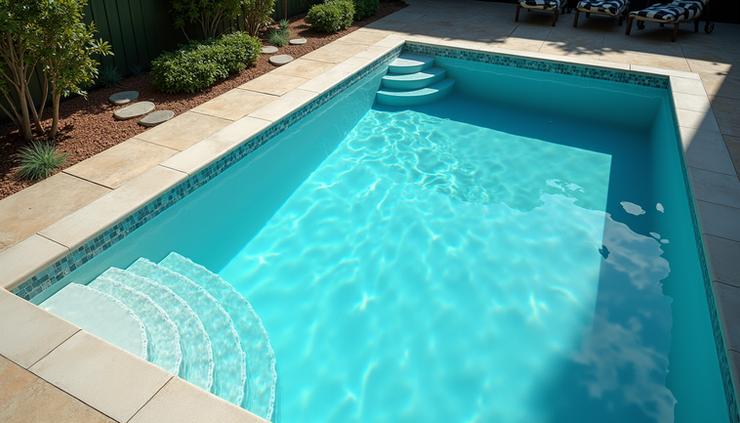
Concrete Swimming Pools
Concrete pools are built on-site by spraying or pouring concrete over a rebar framework. They are then finished with plaster, tile, or aggregate.
Advantages of Concrete Pools
Unlimited Customization
Concrete pools can be built in any shape, size, or depth. You can add features like steps, benches, waterfalls, or custom tile work.
Extremely Durable
Concrete pools are very strong and can last 30 years or more with proper maintenance.
High-End Appearance
The finish options allow for a luxurious, natural look that can blend with any landscape.
Can Handle Harsh Climates
Concrete pools tolerate extreme weather and soil conditions better than vinyl or fiberglass.
Disadvantages of Concrete Pools
High Installation Cost
Concrete pools are the most expensive to build due to labor, materials, and time.
Long Construction Time
Building a concrete pool can take several weeks to months.
Rough Surface
The plaster or aggregate finish can be rough and abrasive, which may cause discomfort or skin irritation.
Higher Maintenance
Concrete pools require frequent cleaning and chemical balancing to prevent algae and surface staining.
Potential for Cracks
Over time, concrete can develop cracks that require repair.

Making the Right Choice for Your Home
When deciding between vinyl, fiberglass, and concrete pools, consider your budget, timeline, design preferences, and how much maintenance you are willing to do.
Choose vinyl if you want an affordable pool with flexible shapes and a soft surface, and you don’t mind replacing the liner every decade or so.
Choose fiberglass if you want a durable, low-maintenance pool with a smooth surface and faster installation, but can accept limited design options.
Choose Concrete if you want a durable, premium finish with a luxory feel that will make you the envy of all your neighbors.


Comments